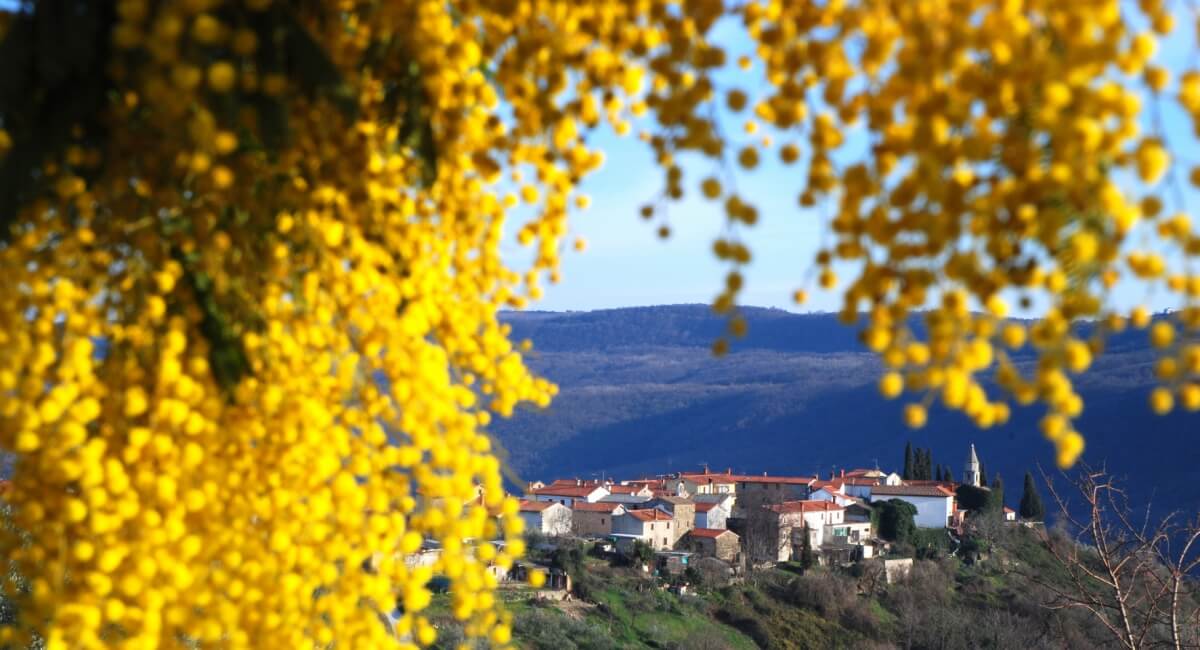
Charming Istrian Villages – Stone Houses and Small Churches
Set out to explore picturesque Istrian villages with characteristic stone houses and small churches, spread across hills with stunning views of the Adriatic Sea and the Gulf of Trieste. Villages such as Koštabona (20 km), Marezige (14 km), and Hrastovlje (20 km) enchant with their authentic charm. In Hrastovlje, be sure to visit the Church of the Holy Trinity with its famous fresco “Dance of Death”.
Settlement Layout and Terraced Olive Groves
In the past, people settled near springs, as drinking water was vital for survival. There is no single settlement type in Istria; villages were built on slopes, ridges, and natural promontories, often along roads that enabled transport and trade. Terraced olive groves stretch across the hills, while fertile valleys are mainly used for fields. Today, many side roads are ideal for cycling and discovering scenic villages.
Mediterranean Nature and Orchards
The Slovenian coast is known for olive trees, grapevines, figs, sage, lavender, and rosemary. The Mediterranean climate also supports many fruit species – from native fig trees, grapes, and pomegranates to foreign varieties such as persimmon, jujube, mandarin, and kumquat. In cooler areas, peaches, apricots, cherries, plums, strawberries, blackberries, and elder thrive, enriching the colorful landscape and scents of Istrian orchards.
Encounter with Nature and Domestic Animals
Forest areas of Istria are home to hares, pheasants, roe deer, foxes, martens, and wild boars. Special value is given to indigenous domestic animals: Boškarin cattle, the Istrian sheep, and the donkey, all part of the cultural heritage and rural life.
Location

slovenia.info
